
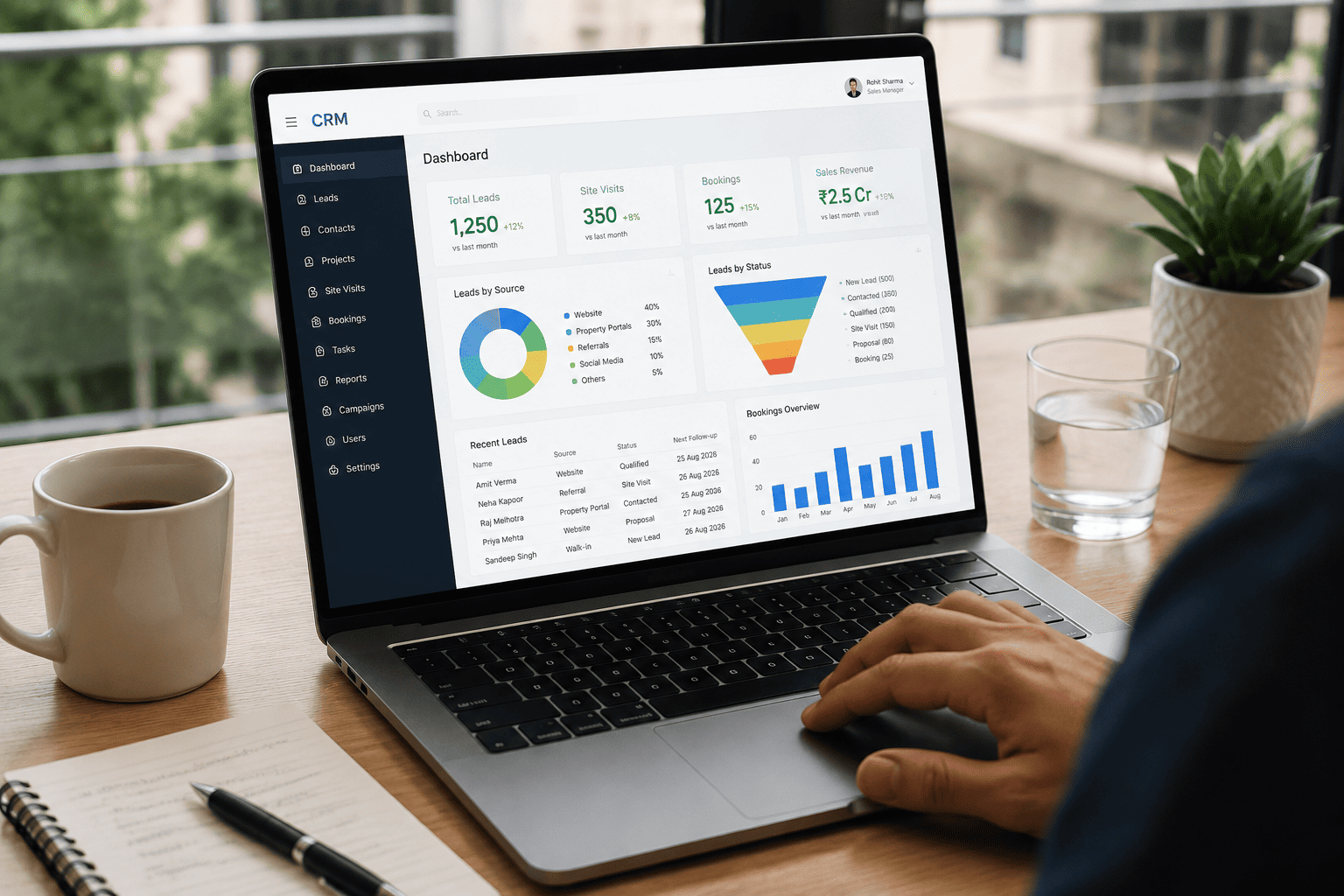
How CRM Software Supports Real Estate Sales and Lead Management
Real estate businesses today manage hundreds of enquiries from multiple channels including property websites, real estate portals, digital marketing campaigns, social media, referrals and channel partners. Managing these leads effectively has become essential for improving sales conversions and maintaining strong customer relationships.
A Real Estate CRM Software helps businesses organise customer data, automate follow-ups, track property enquiries and manage the complete sales process from the first enquiry to final booking. It provides sales teams with a central platform to manage leads, customer interactions, site visits and sales opportunities. Without a proper CRM system, real estate companies often struggle with missed follow-ups, duplicate lead records, delayed responses and limited visibility into sales performance. A Property Sales CRM helps overcome these challenges by connecting lead management, sales activities and customer communication in one place.
Bringing All Leads Into One Place
Real estate businesses receive enquiries from websites, property portals, social media campaigns, referrals, brokers, phone calls and walk-in customers. CRM software brings all leads into one central system where sales teams can view customer details, property interest, budget, preferred location, enquiry source, lead status and previous communication in one place.
Better Lead Assignment and Follow-Ups
CRM software helps sales teams qualify leads and assign them to the right sales executive based on project, location, requirement or sales territory.Sales executives can record calls, meetings, emails and upcoming follow-ups to maintain consistent communication.
Understanding Customer Requirements
CRM software for real estate helps teams maintain detailed buyer profiles by recording important preferences such as budget, preferred location, property type, number of bedrooms, possession timeline and purpose of purchase. This information allows sales executives to understand customer expectations before starting discussions. Instead of showing every available property to every enquiry, sales teams can use customer data to suggest projects and units that better match the buyer's requirements. This creates a more personalised buying experience and helps improve customer satisfaction. A Real Estate CRM also maintains customer interaction history, including previous conversations, property recommendations, site visits and feedback. When a customer reconnects after days or weeks, the sales team can quickly understand their requirements and continue the conversation without collecting the same information again.
Managing Site Visits More Effectively
CRM helps schedule site visits, record customer feedback and track next actions after every visit. Sales teams can manage visit details such as customer information, interested property, assigned sales executive, visit date and follow-up status from one central platform. After a site visit, sales representatives can update customer responses, preferred units, pricing discussions, concerns and level of interest. This information helps teams plan more effective follow-ups and understand which prospects are moving closer to a purchase decision. Real Estate CRM software also gives managers better visibility into site visit activities, helping them track completed visits, pending follow-ups and conversion opportunities. This improves coordination between sales teams and helps increase the chances of converting property enquiries into successful bookings.
Automating Real Estate Sales Activities
Real estate sales teams handle multiple activities every day including lead follow-ups, customer calls, meetings, property presentations and booking discussions. Managing these activities manually can reduce productivity and create delays. Real Estate CRM Software helps automate routine sales activities by providing task reminders, follow-up notifications, lead updates and activity tracking. This allows sales executives to spend more time engaging with customers and closing opportunities. Sales managers also get better visibility into team activities, pending tasks and sales progress through real-time CRM dashboards.
Tracking the Sales Pipeline
A CRM gives real estate teams a clear view of where every lead stands in the sales journey. Instead of managing opportunities through spreadsheets or manual updates, teams can track each prospect through defined stages and take the right action at the right time.
New Lead
Customer enquiry captured from website, portal, campaign or referral.
Qualified
Customer requirement, budget and buying interest are evaluated.
Site Visit
Property visit is scheduled and customer feedback is recorded.
Proposal & Negotiation
Pricing, property details and customer discussions are managed.
Booking & Closed
Successful conversion with booking confirmation and customer completion.
Real Estate CRM software helps businesses monitor pipeline movement, identify delayed opportunities and improve conversion rates through better sales visibility.
Better Reports and Management Visibility
CRM dashboards help management track lead sources, conversions, project-wise sales, site visits, sales executive performance and campaign results. These real-time reports provide a clear view of the complete sales pipeline, helping managers understand how many enquiries are generated, how many leads are converted, which projects are performing better and where sales teams need improvement. By analysing customer data and sales activities, management can identify trends, measure marketing effectiveness and make better decisions based on actual business performance.
Conclusion
CRM software helps real estate businesses organise leads, improve follow-ups, manage customer interactions and gain better visibility from enquiry to final booking. It creates a structured sales process where teams can track every opportunity, maintain complete customer history and respond to prospects at the right time. With better lead management, automated reminders, sales pipeline tracking and real-time reporting, CRM enables real estate companies to reduce missed opportunities, improve customer engagement and increase conversion rates. It also helps management make informed decisions by providing clear insights into sales performance, marketing effectiveness and overall business growth.